
Summary
- Effective 1 July 2024, the Australian government introduced three key changes to the Student Visa Subclass 500: the application fee increased from $710 to $1,600, holders of specified visas including the Temporary Graduate Visa Subclass 485 can no longer apply for a Student Visa onshore, and updated English language proficiency requirements now apply.
- The reforms target “visa hopping,” where individuals cycle between Student and Temporary Graduate Visas to extend their stay in Australia indefinitely, particularly those undertaking short-term vocational courses rather than longer degree programmes.
- Student Visa applicants must now achieve a minimum IELTS Academic score of 6.0 (or equivalent), with those falling below this threshold able to qualify by enrolling in 10 or 20 weeks of ELICOS courses alongside their main course of study, subject to when their English test was taken.
- This article is a guide to the 2024 Student Visa reforms for international students and migration applicants in Australia, explaining the changes to eligibility criteria, costs, and English language requirements under the New Migration Strategy.
- LegalVision is a commercial law firm that specialises in advising clients on immigration law and visa applications.
Tips for Businesses
Employers sponsoring overseas workers or students should review how the new Student Visa restrictions may affect workforce planning, particularly where employees hold Temporary Graduate Visas and may no longer be able to transition back to Student Visas onshore. International students should check their current visa conditions carefully before applying for any further visa to ensure they comply with the updated eligibility requirements. Seek specialist immigration advice before lodging any Student Visa application to confirm eligibility under the new rules.


On 1 July 2024, former Minister for Home Affairs Hon. Claire O’Neil announced in a joint media conference with the Hon Brendan O’Connor MP, the Hon Jason Clare MP, and the Hon Andrew Giles MP the implementation of new Student Visa reforms, effective immediately. The changes aim to tighten restrictions on Student Visa applications in the government’s attempt to curb a problem they define as ‘permanent temporariness’ and visa hopping. This article examines the previous status of the Student Visa and what these changes mean for the future.
Overview of the Student Visa
The current Student Visa Subclass 500 is a program that gives all overseas residents the ability to come to Australia to study and learn at Australian educational facilities. The duration of the visa is typically the length of the course, with a maximum of five years on offer.
The Student Visa typically includes a host of conditions, such as limiting the number of hours the student can work and the academic requirements the student must meet. One condition that can typically applies to the Student Visa is condition 8534—No Further Stay.
Condition 8534 limits the substantive visas an applicant can apply for whilst holding the student visa in Australia. The three visas that can be applied for are:
- Protection Visa Subclass 866: This is designed for refugees and those seeking protection from the Australian government.
- Student Guardian Visa Subclass 590: Only the parents and guardians of a student can access this.
- Temporary Graduate Visa Subclass 485: This visa lets the student work for two to three years after completing their studies in Australia.
Additionally, the Temporary Graduate Visa Subclass 485 visa has three streams:
- Post-Vocational Education Work Stream;
- Post-Higher Education Work Stream; and
- Second Post-Higher Education Work Stream.
What Changes Were Implemented?
Two major changes were made to the eligibility criteria for the Student Visa. They were:
- changes to the price;
- limitations on who can apply; and
- updated English language requirements.
The first change is relatively self-explanatory. The initial government fees associated with the Student Visa have increased from $710 to $1,600, representing an increase of over 120%. This will significantly add to the already expensive process of an overseas student coming to Australia to study.
The second and key change to note is that the Australian government is limiting the requirements of who can apply for a Student Visa whilst in Australia. The following visa holders may not apply for a Student Visa whilst in Australia:
- Subclass 485 (Temporary Graduate);
- Subclass 600 (Visitor);
- Subclass 601 (Electronic Travel Authority);
- Subclass 602 (Medical Treatment);
- Subclass 651 (eVisitor);
- Subclass 988 (Maritime Crew).
At the top of the list are 485 Temporary Graduate visa holders. If you recall, earlier in this article, we said that a Student Visa holder may apply for only three types of visa: Protection, Student Guardian, and Temporary Graduate Visa.
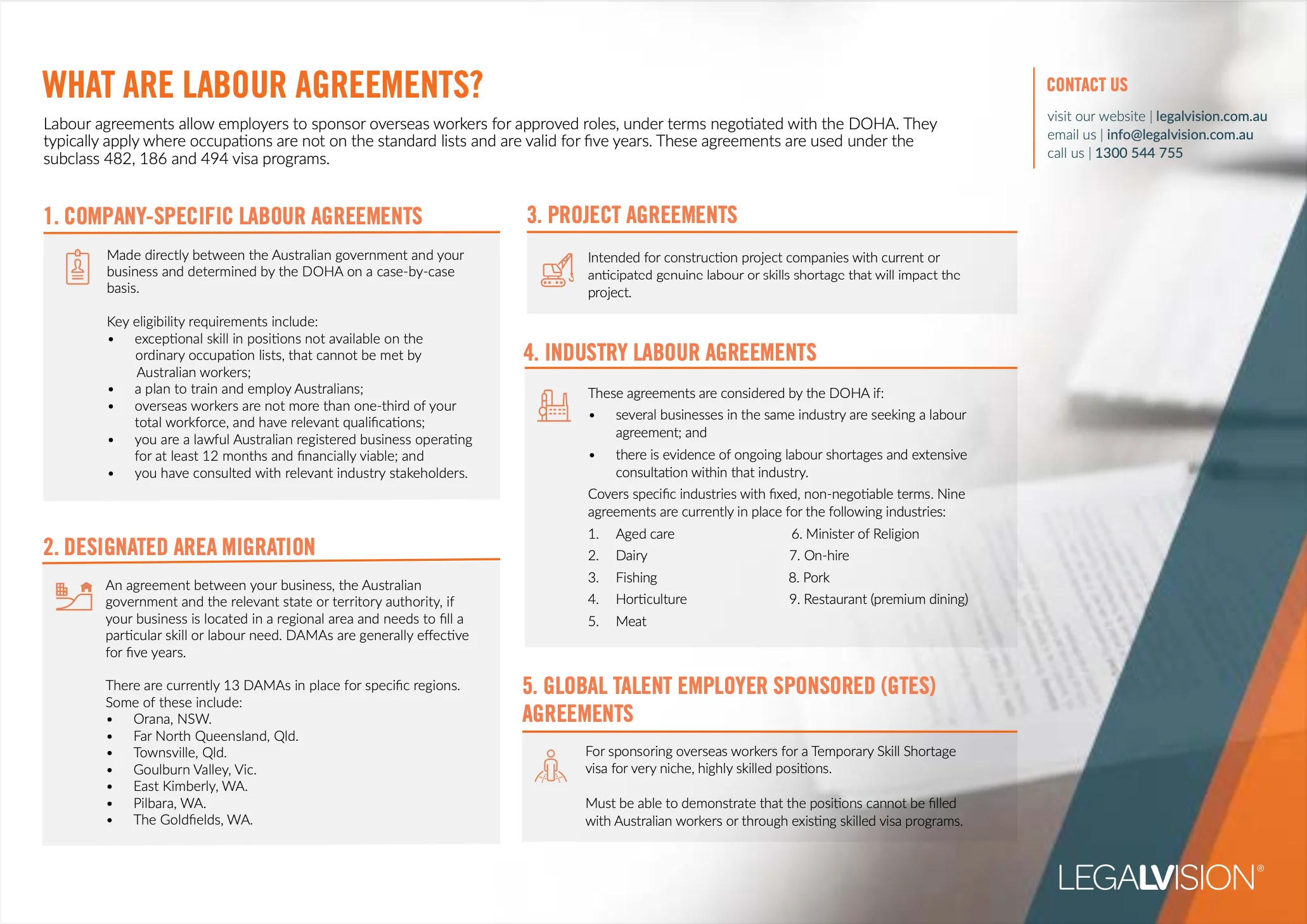
Labour agreements allow employers to sponsor overseas workers for approved roles, under terms negotiated with the DOHA. This factsheet outlines five different types of labour agreements and when they might apply to your business.
Call 1300 544 755 for urgent assistance.
Otherwise, complete this form, and we will contact you within one business day.
Changes to English Language Requirements
The third significant change relates to English language proficiency requirements for Student Visa applicants. The requirements now depend on when you took your English test.
For Tests Taken on or After 7 August 2025
You must achieve a minimum score of IELTS Academic 6.0 (or equivalent). If you cannot meet this score, you may still qualify by enrolling in 10 or 20 weeks of English Language Intensive Courses for Overseas Students (ELICOS) alongside your main course of study. The length of ELICOS required depends on your actual test score.
Important points to note:
- If you’re already on a Student Visa studying ELICOS and apply for another Student Visa whilst still enrolled, the lower test scores apply.
- Previous ELICOS courses you completed before lodging your application don’t count towards lower test score eligibility.
- Lower scores also apply if you’re enrolled in eligible pathway or foundation programmes.
For Tests Taken Before 7 August 2025
The same IELTS 6.0 minimum applies, with similar ELICOS packaging options available if you score below this threshold. However, there’s one key difference: if you’re currently on a Student Visa and weren’t enrolled in ELICOS when you applied but are now studying ELICOS, you can access the lower test scores when applying for your next Student Visa.
What Do These Changes Mean?
In summary, if you are on a Temporary Graduate Visa, you must leave Australia before applying for a new Student Visa. Once offshore, you will need to restart the process of applying for a Student Visa.
Why Did These Changes Occur?
These changes are part of the New Migration Strategy, which was published in December 2023.
The changes to Student Visas seek to curb a problem the government has identified as visa hopping. This is where overseas residents stay in Australia for an extended period as they move between Student and Temporary Graduate Visas. The problem area identified was not those studying four-year bachelor degrees at Australian Universities but rather those studying short-term vocational courses, who could transition from Student Visa to Temporary Graduate Visa and back again, cycling through the temporary visa scheme.
Key Takeaways
The Australian government has introduced new reforms to the eligibility criteria for Student Visas. The first is that the cost has increased, while the second is that Temporary Graduate Visa holders can no longer apply for Student Visas onshore. The purpose of this is to reduce the number of temporary visa holders who remain on non-substantive visas for an extended period of time. Overall, the key effects of these changes are that:
- Student Visa holders can only typically apply for one of the three substantive visas following their study: Protection Visa Subclass 866, Student Guardian Visa Subclass 590, and Temporary Graduate Visa Subclass 485 (if no further stay condition applies); and
- Temporary Graduate Visa holders can no longer apply for Student Visas onshore.
If you have any questions about immigration law changes, LegalVision provides ongoing legal support for all businesses through our fixed-fee legal membership. Our experienced immigration lawyers help businesses manage contracts, employment law, disputes, intellectual property, and more, with unlimited access to specialist lawyers for a fixed monthly fee. To learn more about LegalVision’s legal membership, call 1300 544 755 or visit our membership page.
Frequently Asked Questions
No, under the new rules effective from 1 July 2024, Temporary Graduate Visa (Subclass 485) holders cannot apply for a Student Visa while in Australia. They must leave the country before reapplying for a Student Visa. This change is part of the government’s effort to reduce ‘visa hopping’ and limit extended stays on temporary visas.
The changes were introduced as part of Australia’s New Migration Strategy, aiming to address the issue of ‘visa hopping.’ This refers to individuals who cycle between Student Visas and Temporary Graduate Visas, extending their stay in Australia indefinitely. The government intends to limit this practice by increasing costs and restricting visa applications from within the country.
Condition 8534 (No Further Stay) limits Student Visa holders to applying for only three visas whilst in Australia: the Protection Visa Subclass 866, Student Guardian Visa Subclass 590, and Temporary Graduate Visa Subclass 485.
Applicants must achieve a minimum IELTS Academic score of 6.0 or equivalent. Those who cannot meet this threshold may still qualify by enrolling in 10 or 20 weeks of ELICOS courses alongside their main course of study.
We appreciate your feedback! Request your free consultation now.