
In Short
- Training isn’t legally mandated for franchisors, but once promised in franchise agreements or disclosure documents, it becomes a binding obligation.
- Failure to provide adequate training can amount to breach of contract, breach of the Franchising Code, or misleading conduct, exposing franchisors to refunds, damages, rescission, and regulatory penalties.
- Effective training reduces disputes, protects brand standards, and strengthens franchisee performance across the network.
Tips for Businesses
Franchisors should ensure all training representations, whether written or verbal, accurately reflect what will be delivered. Keep training programs up to date, document participation, and maintain detailed records to demonstrate compliance. Regularly review disclosure documents and franchise agreements with a lawyer to confirm that training obligations are clear, achievable, and legally defensible.


The franchise relationship depends heavily on the successful transfer of knowledge, systems, and brand standards from franchisor to franchisee. When franchisors fail to provide adequate training, they expose themselves to significant operational challenges while potentially undermining the entire franchise system. Understanding the legal implications of that situation is crucial for franchisors operating in Australia’s regulated franchise environment. This article will walk you through the training obligations of franchisors, the types of training typically provided, the legal requirements that may apply, and the serious consequences of failing to deliver adequate training to franchisees.
Training Obligations of the Franchisor
Australian franchise law does not explicitly mandate that franchisors must provide training to their franchisees. However, the legal landscape creates several pathways through which training obligations arise and become legally enforceable.
The Nature of Franchise Systems and Training
A franchise arrangement exists where a business is substantially controlled, determined or influenced by a franchisor. This fundamental characteristic creates an inherent expectation that franchisors will provide necessary guidance to enable franchisees to operate within the prescribed system.
Practically speaking, inducting someone into a controlled business system almost inevitably requires training. Training represents one of the most attractive propositions of franchise ownership – prospective franchisees invest specifically in an established business model with comprehensive support. Most franchise agreements make passing initial training a mandatory prerequisite to commencing operations.
Legal Framework and Contractual Obligations
While the Franchising Code of Conduct does not mandate specific training requirements, it establishes disclosure obligations that often reference training programs. Franchisors must provide clear and accurate information in their Disclosure Documents about initial training, ongoing training requirements, cost allocation, and both parties’ participation obligations.
The legal landscape changes dramatically when franchisors make training commitments in franchise agreements, disclosure documents, or discussions with prospective franchisees. These representations become legally binding contractual obligations that courts will strictly enforce.
Failure to deliver promised training may constitute breach of the Franchising Code of Conduct, contractual breach, and misleading conduct under Australian Consumer Law. Franchisees can pursue various remedies, including refund of training fees, termination of franchise agreements (particularly where training goes to the heart of their investment decision), complete rescission with refund of initial franchise fees, and damages claims for losses suffered.
Beyond immediate legal exposure, inadequate training creates significant commercial risks. Franchisors may face regulatory consequence,s including fines, damages, and specific performance orders. Disputes require disclosure in future franchise documents, potentially creating reputational damage that deters quality prospects. Poor franchisee performance stunts network growth and undermines brand value, while declining customer satisfaction affects the entire franchise system.
Typical Training Provided by Franchisors
Franchise training typically encompasses several key components that work together to prepare franchisees for successful operations.
Initial Training
Franchisors usually conduct comprehensive initial training covering operational procedures, product knowledge, customer service standards, and business management principles. This training often occurs at the franchisor’s headquarters, designated training facilities, or another franchisee’s premises and may last several days or weeks.
Ongoing Training
This ensures franchisees remain current with system changes, new products, and evolving best practices. Franchisors typically provide this through regular workshops, webinars, or field visits. Ongoing training may be mandated by the franchisor as part of system requirements, implemented as part of performance management for underperforming franchisees, or provided on request from franchisees when they need support for new staff members or store managers. Ongoing training addresses operational challenges, introduces new procedures, and maintains consistency across the franchise network.
Franchise Conferences and Meetings
These serve dual purposes of training and network building. Whether delivered through large-scale conferences, regional meetings, or online sessions, these gatherings allow franchisors to communicate strategic directions, introduce new initiatives, collect feedback from franchisees on the system, and facilitate peer learning among franchisees. Many franchise systems consider these events essential for maintaining brand standards and system cohesion.
Training Manuals and Resources
These provide reference materials that support both initial and ongoing training efforts. These comprehensive documents typically include operational procedures, brand guidelines, marketing materials, and troubleshooting guides. Franchisors regularly update these materials to reflect changes such as new products, services, or equipment, often providing consultation periods for franchisee feedback and establishing roll-out timeframes for implementing system changes. Effective manuals serve as permanent training resources that franchisees can access whenever needed.
Continue reading this article below the formCall 1300 544 755 for urgent assistance.
Otherwise, complete this form, and we will contact you within one business day.
No Formal Legal Requirement, But Critical Importance
While Australian law does not impose blanket training requirements on all franchisors, the practical and legal importance of adequate training cannot be overstated. The absence of formal legal mandates does not shield franchisors from consequences when inadequate training leads to system failures or franchisee losses.
Training serves multiple legal protection functions for franchisors. Well-trained franchisees are more likely to succeed, reducing the risk of system-wide reputational damage. Comprehensive training also demonstrates the franchisor’s commitment to franchisee success, which courts may consider when evaluating claims of unconscionable conduct or breach of good faith.
The competitive franchise marketplace makes training a practical necessity. Prospective franchisees compare training offerings when selecting franchise opportunities. Franchisors who fail to provide competitive training programs risk losing quality franchisee candidates to competitors who offer more comprehensive support.
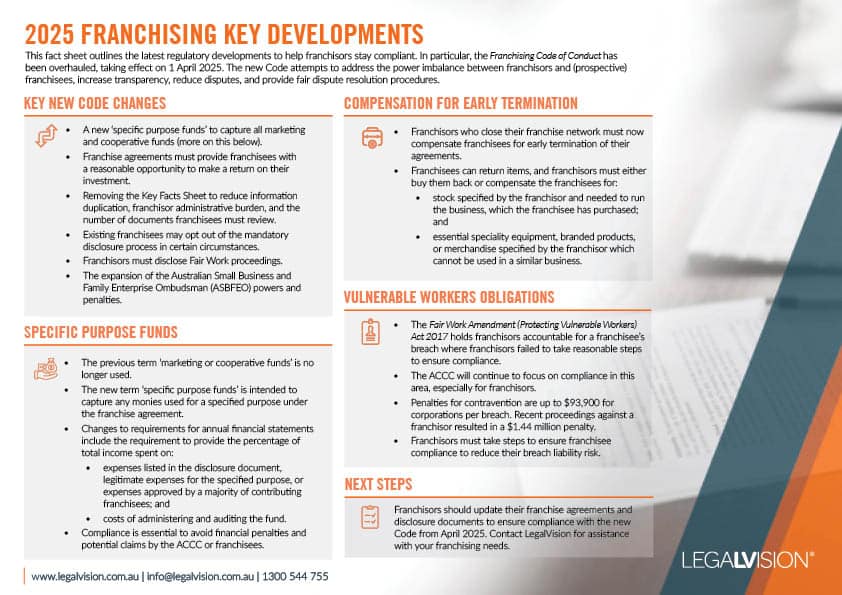
Understand the latest regulatory developments to help franchisors stay compliant. Download our free factsheet today.
Key Takeaways
Franchisors must recognise that training commitments create legally enforceable obligations regardless of whether formal legal requirements exist. The prudent approach involves treating all training representations seriously and ensuring delivery matches promises made in disclosure documents and franchise agreements.
Comprehensive training programs serve both as business necessities and as legal protections. Well-designed training reduces franchisee failure rates, protects the brand reputation, and demonstrates a good-faith commitment to franchisee success. Regular review and updating of training programs ensures continued relevance and effectiveness. Franchisors should document training delivery and maintain records demonstrating compliance with contractual commitments.
Professional legal advice becomes essential when developing training obligations and addressing training-related disputes. The complex interplay between contract law, consumer protection legislation, and franchise-specific regulations requires expert guidance to navigate successfully.
The investment in proper training ultimately protects franchisors from significant legal and commercial risks while building stronger, more successful franchise systems.
If you are unsure about your training obligations as a franchisor, our experienced franchising lawyers can assist as part of our LegalVision membership. You will have unlimited access to lawyers to answer your questions and draft and review your documents for a low monthly fee. Call us today on 1300 544 755 or visit our membership page.
Frequently Asked Questions
While Australian law does not impose blanket training requirements on all franchisors, training obligations become legally enforceable when franchisors make specific commitments in their franchise agreements or disclosure documents. Once training is promised, franchisors must deliver as represented or face legal consequences.
The Franchising Code of Conduct requires franchisors to include a description of any initial training, details of ongoing training and associated costs, and a clear outline of both parties’ obligations regarding training participation.
Adequate training is generally defined by what the franchisor has promised to provide in their contractual documents, marketing materials, or verbal discussions. The training must be sufficient to enable franchisees to operate the business according to the franchisor’s system and meet the expectations created through the disclosure process.
We appreciate your feedback – your submission has been successfully received.