


When you invest in a franchise, securing suitable premises is often one of the most critical decisions you will make. The location and terms of your lease can significantly impact your business success, cash flow, and long-term viability. However, leasing arrangements in a franchise context are more complex than standard commercial leases, as you must navigate relationships with both your franchisor and potentially a landlord.
Understanding how these leasing arrangements work is essential before you commit to a franchise opportunity. Getting this wrong can result in breaches of contract, financial losses, or even the premature termination of your franchise.
There are two basic ways that leasing arrangements are structured in a franchise agreement:
- you lease directly from a landlord; or
- the franchisor holds the lease and grants you a licence or sub-lease to use the premises.
Each option comes with distinct advantages, risks, and legal implications that you need to carefully consider before proceeding. This article compares direct landlord leases and franchisor sub-leases for franchisees, covering key legal considerations and risks.
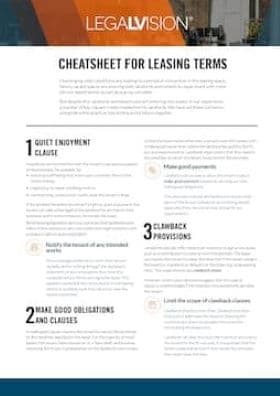
This cheat sheet explains the key clauses you need to be aware of as a landlord in a lease agreement.
Leasing Directly Through a Landlord
If you choose to enter into a lease with the landlord of the premises, you need to be aware that you have separate obligations to your landlord and to the franchise. You will be solely responsible to negotiate the terms of the lease and satisfy your requirements under the lease, including paying rent.
One of the most important things to do is to make sure that the terms of the franchise agreement and the lease agreement commence and end at the same time. You do not want to find yourself in a position where you need to vacate the property and are in breach of your duties under the franchise agreement, or where the franchise agreement has already commenced, and the lease has not yet started.
You should also ensure that the lease permits any operations required by the franchise as well as any franchisor requirements such as signage rights, fit-out and operating hours. It is also important to note that franchisors typically require approval rights over respective lease terms.
Licencing the Premises From the Franchisor
If a franchisor has an existing lease over a premises they will likely offer to give you a licence to use those premises. It will be the franchisor that bears the risk should something go wrong, so they may ask you to provide a personal or bank guarantee to ensure themselves against damage or non-payment of rent. Be sure to direct any permission requests, complaints and queries to the franchisor and not to the landlord.
Alternatively, the franchisor might sub-lease the property to you. In either event, you will have a clear legal obligation to pay rent to the franchisor.
Continue reading this article below the formCall 1300 544 755 for urgent assistance.
Otherwise, complete this form, and we will contact you within one business day.
What is the Difference Between a Licence and a Sub-Lease?
Generally, a sub-lease provides you with greater rights and autonomy than a licence. A licence allows you to use the premises for a specified purpose, whereas a sub-lease creates a relationship between you and the landlord and gives you the right to exclusively possess the premises. A licence, on the other hand, may not provide you with the right to exclusively possess the premises and could offer rights to a licensor or landlord to access the premises at any point and time. Additionally, it is important to note that a licence is contractual in nature, whilst the sublease grants you an interest in the land.
Permitted Use Clauses
If you are leasing directly from the landlord you need to read the lease agreement to ensure that the intended purpose of your business fits within the permitted use provision. As the landlord is not making any warranties and promises regarding the suitability of the premises, by using the premises for anything other than the permitted use noted in the lease, you could potentially be in breach of the lease and at risk of the landlord terminating the lease and suing for damages.
You should also ensure that the premises are approved for the intended use by making enquiries with the local council, as you could be in breach if your use does not comply with local council approvals.
You should also check that you have council approval to use the premises, as most leases will require you to comply with all laws relating to the premises, which could include council zoning requirements
Fit Outs
It is also important to check the commercial lease agreement to make sure that you will be allowed to put up any relevant signage and make the changes you need in order to run your franchise business. Most commercial leases require landlord consent for any alterations, including the installation of signage, branding, equipment and fit-out specified by your franchisor.
Options to Renew
Keep a close eye on the options for lease renewal clauses in the lease agreement. Usually, there is a procedure you have to follow, criteria you have to meet, and a notice period during which time you have to give your intention to renew. If you do not comply with these criteria, the landlord is within their rights to refuse your lease renewal request. You should also ensure that the option term in the lease aligns with the franchise agreement and any renewal options under the franchise agreement.
As an additional requirement, most leases outline that you should not be in breach of the lease at the time that the option is exercised.
Key Takeaways
Navigating leasing arrangements within a franchise requires careful consideration of your specific circumstances and the structure that best suits your business needs. Whether you lease directly from a landlord or operate under a licence or sub-lease from your franchisor, understanding your rights and obligations is essential to avoiding costly disputes and ensuring the smooth operation of your franchise.
LegalVision provides ongoing legal support for franchises through our fixed-fee legal membership. Our experienced leasing lawyers help businesses in the franchise industry manage contracts, employment law, disputes, intellectual property and more, with unlimited access to specialist lawyers for a fixed monthly fee. To learn more about LegalVision’s legal membership, call 1300 544 755 or visit our membership page.
Frequently Asked Questions
Both options have different risks. Leasing directly gives you more control but separate obligations to the landlord and franchisor. Leasing through the franchisor (by licence or sub-lease) can be simpler, but usually gives you fewer rights and requires you to follow the franchisor’s processes closely.
You should ensure the lease term aligns with the franchise agreement, the permitted use covers franchise operations, fit-out and signage are allowed, and renewal options are clear. You should also understand rent obligations, guarantees, and make good requirements to avoid disputes or unexpected costs later.
We appreciate your feedback – your submission has been successfully received.