
Summary
- Australian businesses operating as sole traders, registered businesses, or companies must have an ABN or ACN to register a country code top-level domain such as ‘.com.au’ through an auDA-accredited registrar.
- Non-commercial websites do not require an ABN, and generic domains such as ‘.com’ or ‘.org’ are available to anyone without an ABN or ACN.
- Once registered, businesses should protect their domain name by registering it as a trade mark, as a competitor with a registered trade mark can prevent you from using a similar or identical domain name.
- This article explains when an ABN is required to register a domain name for business owners launching an online business in Australia.
- LegalVision, a commercial law firm specialising in advising clients on e-commerce and intellectual property, outlines the registration requirements and how to protect your domain.
Tips for Businesses
Before registering a domain, check whether the name is already in use or trade marked by a competitor in your industry. Register WHOIS Protection to keep your personal contact details private. Once your domain is secured, apply for a trade mark to protect your brand and prevent others from using the same or similar name.


When launching an online business in Australia, securing the right domain name is essential for your brand’s online presence. Whether you need an Australian Business Number (ABN) to register that domain depends on how you intend to use your website. This article will explain when you need an ABN to register a domain name in Australia and how to protect your domain.
Registering a Domain Name
The first step when registering your business domain name is to purchase a country code top-level domain (ccTLD), such as a ‘.com.au’ domain name. The ccTLD will generally point to which country your business is operating in. You must then register it through a domain registrar accredited by the Australian Domain Name Authority (auDA). The auDA is the regulatory body that sets out the use of the ‘.au’ domain space. Under the auDA, you must register a ccTLD domain if your business structure is one of the following:
- Australian sole trader;
- registered business; or
- company.
If you are a sole trader, business, or company, you must register an ABN or Australian Company Number (ACN) if you are a company to receive a ccTLD domain. While you need to have an ABN or ACN to get a ccTLD domain, there are other avenues to registering a domain name. These are available to owners of a:
- trade mark number;
- state business number; or
- incorporated association number.
If you are launching a website for non-commercial purposes and do not plan to operate a business from your website, you will not need an ABN to register the name.
Registering a ‘.org.au’ Domain Name
If you register a ‘.org.au’ domain name, your business must be a registered not-for-profit organisation or charity. This involves applying for registration with the Australian Charities and Not-for-profits Commission (ACNC). The application involves following strict legal requirements and meeting ACNC criteria. Once you are registered with the ACNC, you will be given a charity ABN, which you can use to register your ‘.org.au’ domain.
Continue reading this article below the formCall 1300 544 755 for urgent assistance.
Otherwise, complete this form, and we will contact you within one business day.
Registering a Domain for Non-Commercial Use
You can also register a domain without an ABN or ACN. This applies when you do not wish to run a business from your website. For non-commercial use, registerable domains include:
- .com;
- .net;
- .org; or
- .info.
These domain names are not country-specific, and anyone can register them. You can use any domain registrar and select the period you would like to register the domain for. This can be from one year to ten years.
Protecting Your Identity
When you register a domain, you will need to provide certain contact information, such as your:
- name;
- phone number;
- email address; and
- postal address.
This information will be publicly available through a WHOIS registry (pronounced as the phrase “who is”), which allows people to trace the ownership and tenure of domains. If you do not want this information to be publicly available, you should register your domain with WHOIS Protection. This will mask your personal information, and anyone who wishes to contact you will be required to go through the domain registrar.
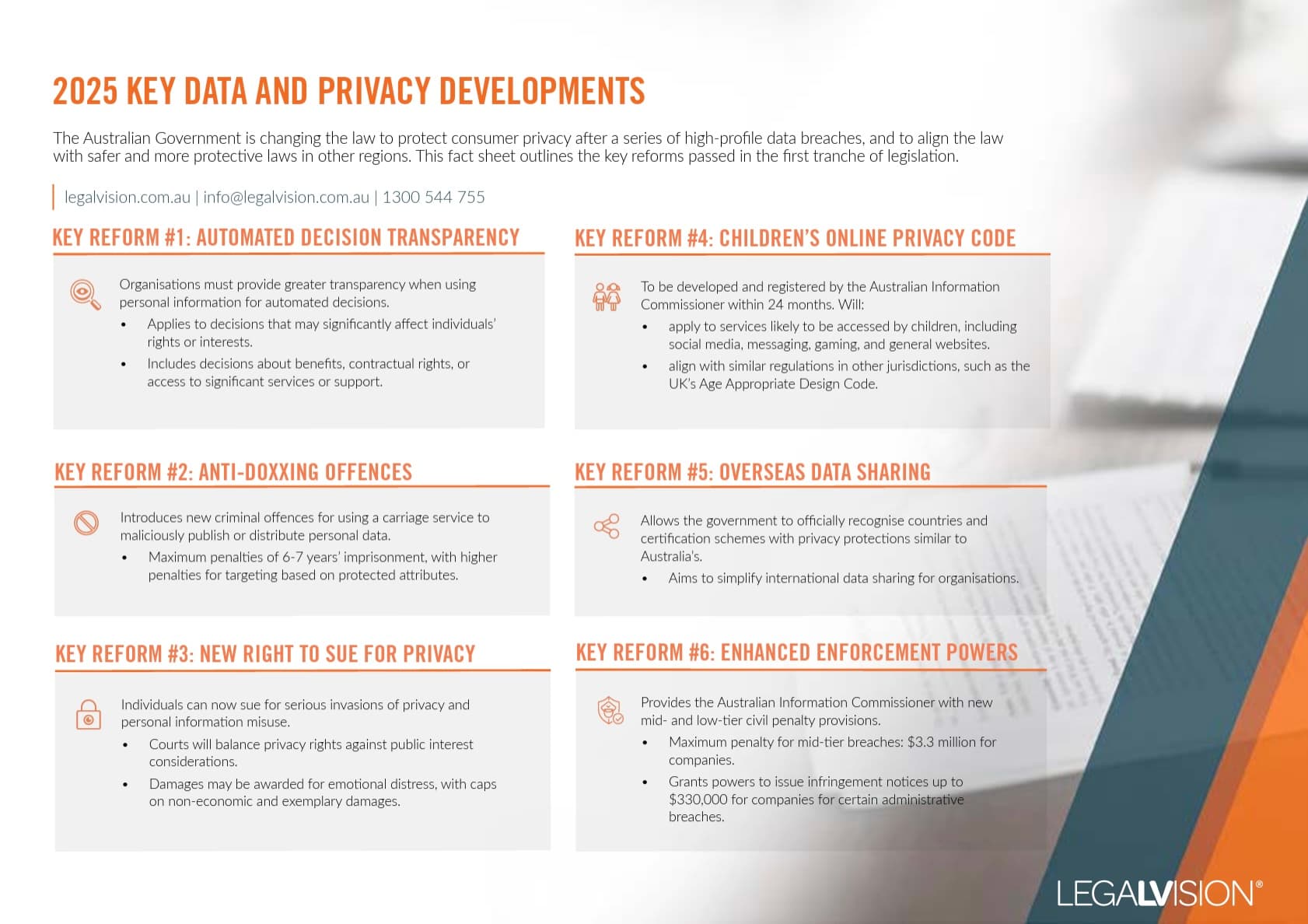
This factsheet outlines the Australian Government’s strengthened consumer privacy laws in 2025 following major data breaches and their alignment with global standards.
Protecting Your Domain Name
Before you register your domain, it is important to do your due diligence and find out whether your preferred name is being used by another business in a similar industry. If it is, this can confuse customers, and it may create intellectual property (IP) issues in the long term.
If your competitor has registered their name as a trade mark, they can stop you from using a similar or the same name as your domain name. Importantly, you should therefore protect your domain with a trade mark once you have registered it.
Key Takeaways
If you are planning on setting up a website, you may not need an ABN or ACN. However, you will need an ABN or ACN if you are running an online business or conducting business via your website. Therefore, it is crucial to ensure that your business is properly registered so that you can secure your domain name for your business. It is also important to protect your domain name with methods such as a trade mark.
If you have any questions about registering an ABN or domain name, LegalVision provides ongoing legal support for businesses through our fixed-fee legal membership. Our experienced e-commerce lawyers help businesses manage contracts, employment law, disputes, intellectual property, and more, with unlimited access to specialist lawyers for a fixed monthly fee. To learn more about LegalVision’s legal membership, call 1300 544 755 or visit our membership page.
Frequently Asked Questions
To purchase a country code top-level domain (ccTLD domain), such as a ‘.com.au’ domain name, you must register it through a domain registrar accredited by the Australian Domain Name Authority (auDA).
If you are registering a ‘.org.au’ domain name, your business must be a registered non-profit or charity.
If you are launching a website for non-commercial purposes and you do not plan to operate a business from your website, you will not need an ABN to register the name. However, if you do plan to operate a business, you will need an ABN.
Once you have registered your domain, you should protect it with a trade mark. If a competitor has already registered a similar name as a trade mark, they can stop you from using it as your domain name, making early trade mark registration an important step in securing your online brand.
We appreciate your feedback! Request your free consultation now.